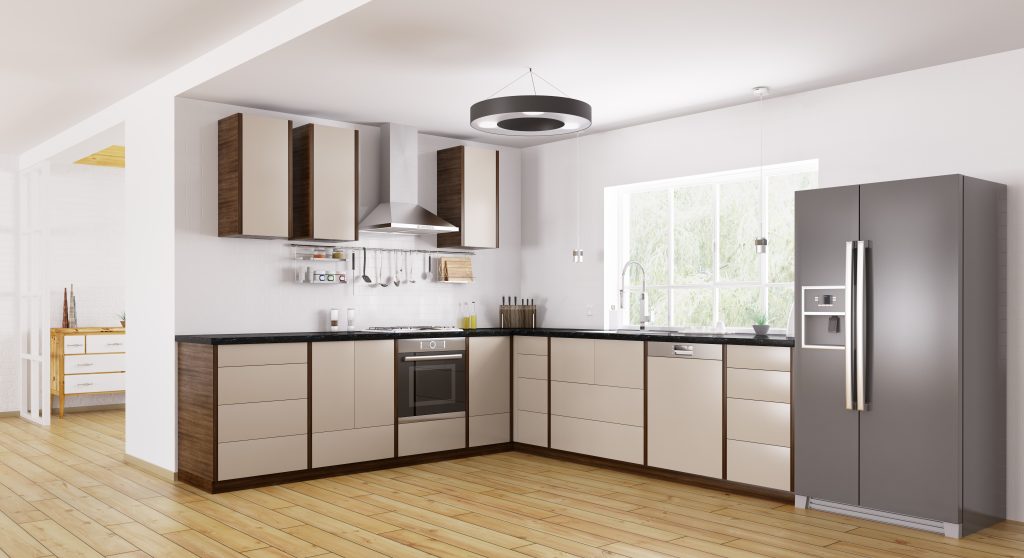
In a busy household, a kitchen has to cope with far more than cooking. Drawers are opened dozens of times a day, breakfast dishes compete for space beside the sink, and worktops may double as places for homework or family activities. These everyday demands make construction and storage worth examining when considering Schüller kitchens.
Manufactured in Germany, Schüller offers a broad selection of cabinet configurations, finishes and internal fittings. The brand sits above entry-level kitchen furniture in price, so buyers need to understand what they are paying for. This post examines the quality, costs, design options and practical considerations before ordering.
Who Makes Schüller Kitchens?
Schüller is a family-owned manufacturer based in Herrieden, Bavaria, where it has produced kitchen furniture since 1966. Its kitchens are manufactured at a single German site, using automated machinery alongside skilled assembly and quality checks.
The company carries out a substantial proportion of its manufacturing in-house, while working with specialist suppliers for other components. This gives it control over important stages of production, although the quality of the finished kitchen also depends on the selected specification and installation.
Schüller sells its furniture through specialist retailers rather than supplying homeowners directly. That distinction matters when a property has an awkward layout or requires substantial changes to the existing kitchen.
A narrow galley kitchen, for example, needs careful planning to leave enough room for appliance doors to open without obstructing cupboards or walkways. Working with a German Kitchen Supplier at the design stage gives homeowners an opportunity to check which Schüller units will fit before ordering. Kitchencraft Design Studio offers free, no-obligation design consultations across Essex, helping homeowners plan cabinet sizes and storage around the available space.
Schüller Kitchen Ranges and Finishes
Schüller produces contemporary handleless kitchens alongside more traditional designs, with door finishes ranging from smooth matt surfaces to textured wood effects. The selection makes it possible to choose furniture that suits the property without sacrificing practical storage.
In a modern Chelmsford kitchen-diner, handleless cabinetry may work well where the cooking area is visible from the living room. A cottage kitchen in Colchester might suit framed doors and warmer colours, particularly when the existing property has traditional architectural features.
Surface materials deserve attention beyond their appearance. Laminate fronts are generally straightforward to clean, making them practical for family kitchens. Lacquered finishes offer different levels of sheen, but their resistance to scratches and visible marks varies. Selected Schüller matt fronts also have anti-fingerprint properties, although this should be confirmed for the particular finish.
Schüller holds PEFC certification relating to timber and wood-based materials from controlled sources. Buyers interested in environmental credentials should still check the composition and maintenance requirements of the products included in their quotation.
How Much Do Schüller Kitchens Cost in the UK?
Schüller does not publish a fixed UK retail price because kitchens are configured individually and sold through retailers.
Kitchencraft Design Studio gives indicative Schüller prices of £6,000 to £12,000 for basic kitchen furniture, £12,000 to £20,000 for mid-range specifications and £20,000 or more for higher-end designs. Its published estimates also place many fully fitted family kitchen projects with appliances and worktops between £18,000 and £30,000. These are general estimates, not quotations for a particular property.
The difference between furniture costs and the completed installation deserves careful attention. Worktops, appliances, delivery, fitting and alterations to existing services may be charged separately.
Storage choices affect the price too. Deep pan drawers, internal organisers and specialist corner fittings generally cost more than standard cupboards, although they may make daily use considerably easier.
For buyers researching German kitchens in the UK, an itemised quotation offers a better comparison than the headline price alone. Check what is included and whether the proposed layout accounts for the work required in the existing room.
Are Schüller Kitchens Good Quality?
The construction details are useful when assessing a Schüller kitchen, but their value becomes clearer once you consider how the furniture will be used. The manufacturer specifies 19 mm shelves, reinforced back panels and solid wood cabinet cross members, while soft-closing hinges control the movement of cupboard doors.
In a family kitchen, it is worth checking how the proposed drawers handle heavy pans, whether frequently used cupboards are easy to reach and how much accessible storage the layout actually provides. These practical checks give buyers a better basis for judging quality than the appearance of the cabinet fronts alone.
Schüller also tests its fronts for their response to dry heat and high humidity, both relevant in a room exposed to steam and changing temperatures. Fluctuations in temperature and humidity can affect timber components over time, while individual finishes still have different cleaning requirements.
The limitations come mainly from the manufacturing system. Although Schüller provides numerous cabinet configurations, factory-made furniture cannot always accommodate unusual dimensions as freely as handmade joinery. Uneven walls, awkward corners and exposed structural features may require additional planning or finishing panels.
Installation has a substantial influence on the result. Cabinets must be accurately levelled, appliance housings positioned correctly and worktops fitted without unnecessary gaps. Even carefully manufactured furniture will disappoint if the measurements or fitting are poor.
What Happens During Design and Installation?
A Schüller kitchen project usually begins with room measurements and a discussion about what the homeowner wants to change.
For a family renovating in Braintree, the priorities might involve replacing poorly positioned cupboards with accessible drawers or creating enough preparation space for several people to use the kitchen together. An extension introduces additional decisions about appliance positions, seating and movement around an island.
Kitchencraft Design Studio begins its design process with home measurements, followed by a 3D presentation. Homeowners can examine sample doors, worktops and storage fittings at the showroom before agreeing on the specification. The service is free, with no obligation to purchase.
Once the design is approved, the furniture is ordered for manufacture. Lead times depend on the chosen specification and production schedule, so the retailer should confirm an expected delivery date before the installation is arranged.
The fitting process may involve removing existing units, preparing walls and completing plumbing or electrical alterations. Where drainage or electrical work is involved, check whether building regulations approval is required. Cabinets are installed before the relevant worktop, appliance and finishing stages. Some worktops require templating after the base units are fitted.
Kitchencraft Design Studio uses experienced fitters and tradespeople, with the same designer remaining involved from the initial concept to completion. This provides continuity when installation details need checking against the agreed design.
What Should You Ask Before Ordering?
A showroom visit is an opportunity to inspect details that photographs rarely capture. Open the drawers, examine the cabinet interiors and check how the proposed door finishes look under different lighting.
Start with the quotation. Does it cover the cabinetry alone, or are worktops, appliances and installation included? Check which storage fittings are standard and whether any shown in the design carry additional charges.
The delivery schedule also needs clarifying. Ask when the order becomes fixed and what happens if a change is requested after manufacturing begins. Confirm who handles damaged components, installation problems and replacement parts.
Warranty arrangements should be provided in writing. Schüller directs customers to their specialist retailer for information about guarantees and complaints, so it is worth establishing who handles aftercare before making a payment. Any commercial guarantee remains separate from your consumer rights under UK law.
Finally, consider whether the design accommodates the household’s ordinary routines. A kitchen that looks spacious in a 3D presentation still needs enough clearance for an open dishwasher, access to frequently used cupboards and convenient places to prepare meals.
Are Schüller Kitchens Worth Buying?
Schüller is worth considering for a family kitchen where reliable fittings, accessible storage and a choice of finishes matter more than having every cabinet individually made. The decision becomes easier when you can assess a specific design rather than the brand as a whole. Check the proposed storage, ask about any adjustments needed for the room and establish what the installation will cost before committing.
For families considering German kitchens in Essex, Kitchencraft Design Studio offers a free design consultation where homeowners can discuss their requirements and explore suitable Schüller options. A visit to the showroom also provides an opportunity to examine the materials and fittings before deciding on the final specification.

Leave a Reply