 Rain taps the window. Kids groan. Within ten minutes, someone asks for the tablet, and honestly, who can blame them? But a grey afternoon doesn’t have to turn into a scroll-fest. With a few ready ideas, a wet day can become the one your family actually remembers.
How Much Screen Time Is Too Much?
The numbers are a bit sobering. Common Sense Media found that kids aged 0 to 8 in the US spent about two and a half hours a day on screens in 2020, and tweens aged 8 to 12 averaged more than five hours in 2021. Meanwhile, the American Academy of Pediatrics suggests only about an hour of quality programming a day for ages 2 to 5.
Rainy days push those numbers up fast. Everyone’s stuck inside, parents are tired, and a screen is the easiest fix. Not wrong, just costly.
Set the Ground Rules Before the Clouds Roll In
Plan beats panic. Agree on a screen budget in the morning, say one movie after lunch, and let the kids help choose it. A limit they helped pick feels fairer, and it’s far easier to enforce.
If that movie plays on the living-room TV, treat the connection like any other door in your home. A VPN encrypts the traffic between your Android TV or streaming box and the internet, which matters most on hotel or holiday-rental Wi-Fi, where rainy-weekend trips tend to end up. You can visit the official site to see how the setup works on a TV. Five minutes of setup, then back to popcorn.
Build a Blanket Fort Empire
Every kid should build one at least once. Chairs, sofa cushions, a few clothespins and the biggest sheet in the house make a decent start. Add a flashlight and suddenly the living room is a cave, a spaceship, or a secret base.
Engineering lives here too. Which blanket sags? Where does the roof need support? Kids test, fail, and fix without anyone calling it a lesson.
Kitchen Science for Small Hands
Rain is perfect baking weather. Even a three-year-old can stir pancake batter, and an eight-year-old can measure flour with surprising focus. Along the way, kids pick up fractions, patience and a basic sense of cause and effect.
Not sure where to start? Pick one:
- Baking soda and vinegar volcanoes, built on a tray
- Homemade playdough from flour, salt and water
- Fruit skewers arranged as a rainbow
- Ice blocks with small toys frozen inside, ready to “rescue” with warm water
Get Moving Without Leaving the House
The CDC recommends at least 60 minutes of physical activity a day for children aged 6 to 17. Clouds don’t cancel that. So push the coffee table aside and turn the hallway into a racetrack.
Put on a playlist. Freeze dance, floor-is-lava, a pillow obstacle course, animal yoga poses. Ten minutes of that and you’ll all be breathing hard, laughing, and ready for lunch.
Art Projects Worth the Mess
Cover the table with old newspaper, then step back. Paint, glue, scissors and a pile of magazines can produce collages, handprint animals or an entire cardboard city.
 Rainy-day art has one rule: no perfect results required. A seven-year-old who spends forty minutes gluing bottle caps onto a box isn’t wasting time. She’s building focus.
Why Play Matters More Than It Looks
Fred Rogers, the host of Mister Rogers’ Neighborhood, put it plainly:
“Play is really the work of childhood.”
Pediatric groups, including the American Academy of Pediatrics, say unstructured play builds creativity, language and problem-solving skills. Nobody needs a worksheet for that. Just time, space and a box of odd objects from the recycling bin.
Quiet Time Still Counts
Not every rainy hour needs to be loud. Pile up cushions in a corner and read aloud, even for fifteen minutes. Picture books, comic strips, chapter books with funny voices.
Puzzles and board games work just as well. A 500-piece puzzle spread across the dining table can quietly eat an entire afternoon, and everyone drifts in to place a piece or two.
Go Outside Anyway
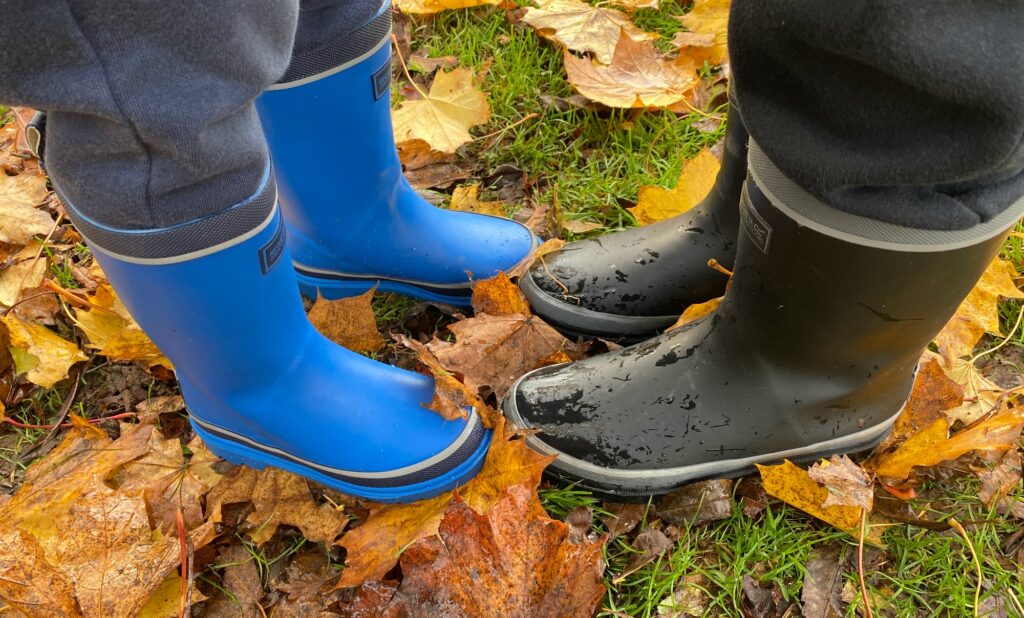
Light rain is not an emergency. Pull on boots and raincoats and head out for a puddle-jumping contest. Sail leaf boats down the gutter, count earthworms on the path, listen to how the rain sounds on an umbrella versus a hood. Twenty minutes later you’ll all be soaked, cheerful, and ready for hot chocolate.
Quick Ideas by Age
Ages 2 to 4
Sensory bins filled with dry rice and scoops, washable finger paint, and plastic cups for stacking and splashing. Stay close, because little ones taste everything.
Ages 5 to 8
Treasure hunts with picture clues, simple board games, and giant cardboard boxes that turn into anything from a bus to a bakery.
Ages 9 to 12
Baking challenges, magic tricks, a homemade comic book, or a family card tournament with a silly trophy.
The Rainy-Day Jar
Here’s a trick worth stealing. Write twenty activities on strips of paper, drop them into a jar, and let the kids draw one when boredom hits. No negotiation, no scrolling, just a lucky dip.
Kids can write half the ideas themselves, which means they’ve already bought into the plan. Decorate the jar together, and you’ve already filled another twenty minutes.
Let It Rain
Screens aren’t the villain here. They’re a tool, and a handy one when used with a plan. The trouble starts when they become the only plan. A rainy afternoon is long, sure, but it’s also a rare stretch of unscheduled time, and most families could use more of that.
So next time the forecast turns grey, skip the groan. Build the fort, bake the cookies, pull out the puzzle. Keep the TV night too, just keep it as one part of the day, not the whole thing. Your kids will remember the soggy boots and the flour on the floor long after they forget which cartoon was on.

Leave a Reply